Category: Uncategorized

  • Mental Health Care Plans and Medicare Rebates for Psychology

    Mental Health Care Plans and Medicare Rebates for Psychology

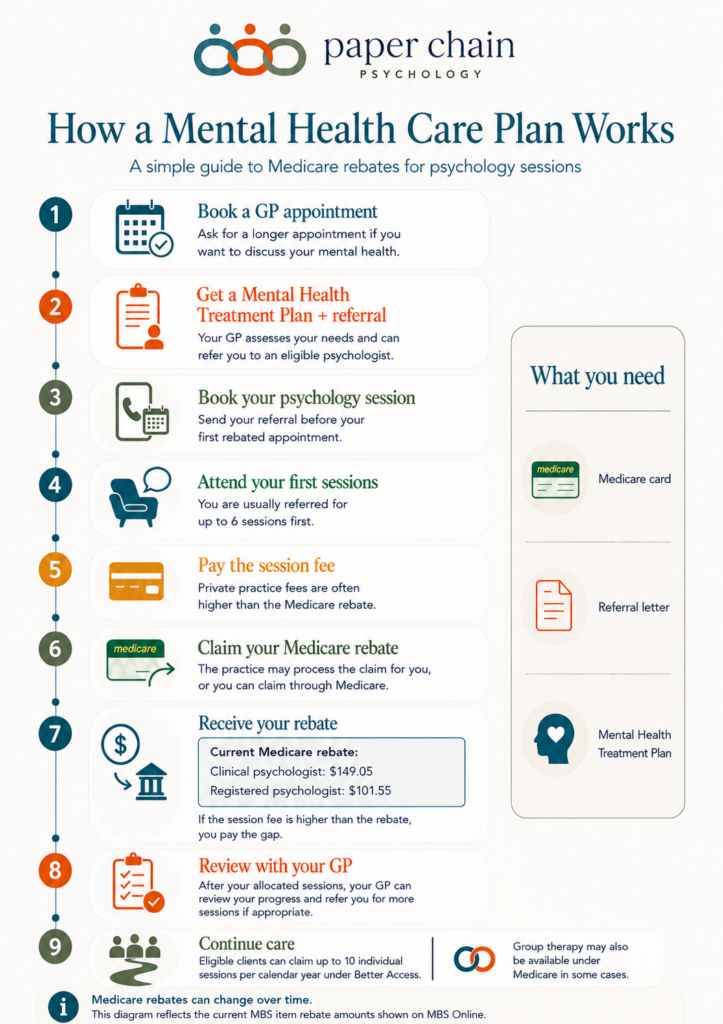
    If you are thinking about seeing a psychologist, or you are already a client, you may be able to claim a Medicare rebate for some of your sessions. This usually requires a referral from your General Practitioner under a Mental Health Treatment Plan, often still called a Mental Health Care Plan or MHCP. (1)

    A Mental Health Care Plan does not make psychology sessions automatically free. It allows eligible clients to receive a Medicare rebate, which reduces the out-of-pocket expenses associated with therapy. At this practice, the session fee is higher than the Medicare rebate, so there will usually be a gap payment after Medicare has paid its rebate. (1)

    This page explains how Mental Health Care Plans work, what Medicare currently contributes, and what changed from 1 July 2026.

    What is a Mental Health Care Plan?

    A Mental Health Care Plan is a plan prepared by your GP or another eligible medical practitioner. It is used when you have a diagnosed mental health condition and your doctor believes psychological treatment may be helpful. (1)

    The plan usually includes your current concerns, treatment goals, referral details, and a review process. It may be used for concerns such as anxiety, depression, trauma-related symptoms, stress, adjustment difficulties, obsessive-compulsive symptoms, and other mental health conditions.

    The formal Medicare term is now Mental Health Treatment Plan, but many people still know it as a Mental Health Care Plan.

    What is Better Access to Mental Health Care?

    Better Access to Mental Health Care is the Medicare initiative that allows eligible people to claim rebates for selected mental health treatment services. These services may be provided by eligible clinical psychologists, registered psychologists, General Practitioners, prescribed medical practitioners, social workers and occupational therapists. (2)

    For psychology clients, Better Access is the program that usually applies when you bring a Mental Health Treatment Plan and referral from your GP.

    How many psychology sessions can I claim through Medicare?

    Under Better Access, eligible clients can claim Medicare rebates for up to 10 individual mental health treatment sessions per calendar year. The calendar year runs from 1 January to 31 December. (2)

    Your GP will usually refer you for up to 6 sessions first. After those sessions, your GP can review your progress and decide whether further sessions are clinically appropriate. If so, you may be referred for additional sessions, up to the annual Medicare limit. (1)

    You can continue therapy beyond the Medicare-rebated sessions if you choose, but Medicare will not rebate more than the annual limit under Better Access.

    What about Group Therapy?

    Better Access may also allow eligible clients to claim rebates for up to 10 group therapy mental health treatment services per calendar year. (2) Group Therapy is separate from individual therapy and is not the same as family therapy or couples therapy.

    Not all psychology practices offer Group Therapy. If it is clinically relevant, your psychologist can discuss whether a group program may be suitable for your goals and circumstances.

    Medicare rebate amounts from 1 July 2026

    Medicare rebates changed from 1 July 2026 due to annual Medicare Benefits Schedule indexation. MBS Online published a 2.6% indexation factor for 1 July 2026. (3)

    For a standard session of at least 50 minutes, the key rebates from 1 July 2026 are:

    Provider typeCommon MBS itemMedicare rebate from 1 July 2026
    Clinical psychologist80010$149.05
    Registered psychologist80110$101.55

    These figures are Medicare rebate amounts, not the full session fee. Psychologists set their own fees, and many private psychology practices charge more than the Medicare rebate. (1)

    What does this mean for your out-of-pocket expenses?

    Your out-of-pocket expense is the difference between the session fee and the Medicare rebate.

    For example, if the session fee is higher than the rebate, you pay the full session fee at the time of your appointment and then receive the Medicare rebate back, provided you have a valid referral and have not exceeded your annual session limit.

    This means a Mental Health Care Plan can make therapy more affordable, but it does not usually remove the cost completely. If you would like to understand your expected out-of-pocket cost, ask the practice about:

    • the full session fee
    • the Medicare item number used
    • the rebate that applies
    • whether the claim can be processed for you after payment

    How do I get a Mental Health Care Plan?

    To access Medicare rebates, book an appointment with your GP and explain that you would like to discuss your mental health and whether a Mental Health Treatment Plan is appropriate.

    It is a good idea to book a longer GP appointment, as your General Practitioner will need time to assess your symptoms, discuss your history, and prepare the plan if you are eligible.

    You can also ask your GP to address the referral letter to a specific psychologist or practice. Please bring or send your referral letter before your first rebated session, as Medicare rules require the referral to be in place for the rebate to apply. (4)

    What should I bring to my first appointment?

    Before your first Medicare-rebated psychology session, please make sure the practice has:

    • your Mental Health Treatment Plan, if available
    • your referral letter
    • your Medicare card details
    • any relevant information from your GP, psychiatrist, paediatrician or other treating health professional

    Your Medicare Card is needed for Medicare claiming. If the practice can process your Medicare claim electronically, Medicare can usually pay the rebate into your registered bank account after the claim is processed. (5)

    Do I need a new plan every year?

    Usually, no. A Mental Health Treatment Plan does not automatically expire. However, you do need a valid referral for the sessions you are claiming. (4)

    If you have unused sessions from a previous referral, they may still be usable, but any sessions claimed in the new calendar year count toward that year’s Medicare limit. Once you have used the sessions covered by your referral, you will need to return to your GP for a review or further referral if more Medicare-rebated sessions are appropriate.

    A new Mental Health Treatment Plan is generally only needed if there has been a significant change in your mental health, or if your previous plan cannot be accessed.

    Can I claim Medicare for online psychology sessions?

    In many cases, yes. Medicare rebates may be available for eligible telehealth psychology sessions, including video consultations, where the usual Better Access requirements are met. (2)

    Telehealth can be helpful if you live outside the local area, have mobility or transport difficulties, are unwell, or prefer online therapy. Your psychologist can discuss whether telehealth is clinically appropriate for your circumstances.

    Can I use Medicare and private health insurance together?

    You generally need to choose either Medicare or private health insurance for a session. Private health insurance usually cannot be used to “top up” the Medicare rebate for the same appointment. (4)

    If you have used all of your Medicare-rebated sessions for the year, you may be able to claim future sessions through private health insurance, depending on your policy. Check directly with your health fund, as cover and rebate amounts vary.

    How do I receive the Medicare rebate?

    Many practices can process your Medicare claim electronically after you pay for your session. If this is available, Medicare usually pays the rebate into your registered bank account.

    If the practice does not process the claim for you, you can claim through your Medicare online account linked to myGov, the myGov app, by mail, or at a Services Australia service centre. (5)

    Does the Medicare Safety Net help?

    If you have high out-of-pocket medical costs in a calendar year, the Medicare Safety Net may help you receive a higher benefit for some out-of-hospital services once you reach the relevant threshold. (6)

    The session fee itself does not change, but your Medicare rebate may increase after you reach the threshold. Services Australia calculates Safety Net thresholds each calendar year. Couples and families may be able to register as a family so their eligible out-of-pocket costs are combined.

    Key things to know before your first appointment

    Before your first Medicare-rebated psychology session, it helps to confirm:

    • you have a valid Mental Health Treatment Plan and referral letter
    • the referral is addressed to the psychologist or practice
    • the number of sessions included in the referral
    • the full session fee
    • the Medicare rebate that applies from 1 July 2026
    • your expected out-of-pocket expenses
    • whether the practice can process your Medicare claim after payment
    • that your Medicare Card details are up to date

    FAQs

    Are Mental Health Care Plans covered by Medicare?

    The GP appointment to prepare a Mental Health Treatment Plan may be covered partly or fully by Medicare, depending on your GP’s billing policy. The plan can then allow you to claim Medicare rebates for eligible psychology sessions. (1)

    Can I get 10 free psychology sessions?

    Not usually. Medicare may rebate up to 10 individual sessions per calendar year, but sessions are only free if the psychologist bulk bills. At many private psychology practices, including practices where fees are higher than the Medicare rebate, there is an out-of-pocket cost. (1)

    What is the current Medicare rebate for psychology?

    From 1 July 2026, the Medicare rebate for a standard 50-minute session is $149.05 with a clinical psychologist under item 80010, and $101.55 with a registered psychologist under item 80110. (3)

    Can I see a psychologist without a Mental Health Care Plan?

    Yes. You can see a psychologist privately without a Mental Health Care Plan or referral. However, you usually need a valid referral and plan to claim Medicare rebates under Better Access. (2)

    Can my GP refer me to a specific psychologist?

    Yes. You can ask your GP to refer you to a specific psychologist or psychology practice. The psychologist must be eligible to provide Medicare-rebated services for a rebate to apply. (4)

    References

    1. Services Australia — Mental health care and Medicare
      https://www.servicesaustralia.gov.au/mental-health-care-and-medicare?context=60092
    2. Australian Government Department of Health, Disability and Ageing — Better Access initiative
      https://www.health.gov.au/our-work/better-access-initiative
    3. MBS Online — July 2026 MBS changes; Item 80010; Item 80110
      https://www.mbsonline.gov.au/internet/mbsonline/publishing.nsf/Content/news-260701
      https://www9.health.gov.au/mbs/fullDisplay.cfm?q=80010&type=item
      https://www9.health.gov.au/mbs/fullDisplay.cfm?q=80110&type=item
    4. Services Australia — MBS billing rules for mental health services
      https://www.servicesaustralia.gov.au/mbs-billing-rules-for-mental-health-services?context=20
    5. Services Australia — Medicare claims
      https://www.servicesaustralia.gov.au/medicare-claims?context=60092
    6. Australian Government Department of Health, Disability and Ageing — Medicare Safety Nets
      https://www.health.gov.au/topics/medicare/about/safety-nets
  • DBT (Dialectical Behaviour Therapy) Therapy

    DBT (Dialectical Behaviour Therapy) Therapy

    What is Dialectical Behaviour Therapy?

    Dialectical Behaviour Therapy, commonly known as DBT, is a structured form of psychotherapy designed to help people manage intense emotions, reduce harmful behaviours and build healthier relationships. It is often described as a practical, skills-based therapy because it does not only focus on talking about problems. It also teaches tools that people can use in daily life when emotions, conflict or stress feel overwhelming.

    DBT is a well-established approach for people who experience intense emotions, emotion dysregulation or difficulty managing impulses, although it may not be the right fit for everyone.[1] It is commonly used with people who experience emotional instability, relationship difficulties, self-harm, suicidal thoughts or suicidal behavior. It may also be adapted for a range of mental health conditions where strong emotions and unhelpful coping patterns play an important role.

    The word “dialectical” refers to the idea that two things can be true at the same time. In DBT, one of the most important dialectics is acceptance and change. A person can learn to accept themselves, their feelings and their experiences as real and valid, while also working to change patterns that are causing pain or harm. This balance is one reason DBT can be especially useful for people who feel caught between self-criticism and emotional overwhelm.

    DBT is most closely associated with four skill areas: mindfulness, distress tolerance, emotion regulation and interpersonal effectiveness. These skills help people notice what they are feeling, respond rather than react, survive difficult moments without making things worse, and communicate more effectively with others.

    The Origins of DBT

    DBT was originally developed by psychologist Dr Marsha Linehan to treat people with borderline personality disorder, particularly those experiencing suicidal behavior or self-harm.[2] It was first designed for people whose symptoms were severe, persistent and difficult to treat with standard therapeutic approaches.

    DBT grew out of cognitive behavioral therapy, but it added important elements that made it more suitable for people with intense emotional experiences. Traditional cognitive behavioral therapy often focuses on identifying and changing unhelpful thoughts and behaviours. DBT includes many of these change-based strategies, but it also places greater emphasis on validation, acceptance, mindfulness and the therapeutic relationship.

    This matters because people with intense emotions may not respond well to approaches that feel purely focused on change. For some, being pushed to change without first feeling understood can increase shame, resistance or hopelessness. DBT addresses this by combining behavioural change with acceptance-based strategies.

    Linehan’s model recognises that people may be doing the best they can with the skills they currently have, while also needing to learn new skills to build a safer and more stable life. This combination of compassion and accountability is central to DBT.

    Over time, DBT has expanded beyond its original use. It is still strongly associated with borderline personality disorder, suicidal behavior and recurrent self-harm, but it is also used or adapted in some settings for post-traumatic stress disorder, substance use disorders, eating disorders, depression, anxiety and other conditions involving emotion dysregulation.[3]

    Core Principles of DBT

    The foundation of DBT is the belief that acceptance and change are both necessary. A person’s emotions, experiences and behaviours can make sense in context, even when those behaviours are no longer helping them. DBT does not assume that people are choosing to suffer or act destructively. Instead, it recognises that many people have learned coping strategies that may once have helped them survive but are now causing problems.

    Validation is a key part of this process. A DBT therapist may help a person understand why their reaction makes sense, while also helping them find a more effective response. For people who have often been told they are “too sensitive”, “overreacting” or “difficult”, this can be an important shift. Validation does not mean agreeing that every behaviour is helpful. It means recognising the real feelings and circumstances behind the behaviour.

    Another important principle is radical acceptance. In DBT, radical acceptance means acknowledging reality as it is in the present moment, rather than spending all of one’s energy fighting against what has already happened. This does not mean approving of painful events or giving up on change. It means reducing the extra suffering that can come from denial, avoidance or constant internal resistance.

    DBT also has a strong behavioural focus. Clients may track emotions, urges, behaviours and skills practice between sessions. This helps therapy become more than a weekly conversation. It becomes a process of noticing patterns, identifying triggers and practising new responses in real situations.

    How DBT is Delivered

    A comprehensive DBT program usually includes several parts. The first is individual therapy, where the client works one-on-one with a therapist. These sessions often focus on current challenges, emotional crises, relationship issues and behaviours the client wants to change. The therapist may help the client analyse what happened before, during and after a difficult situation so they can understand the chain of events and identify where a different skill could be used next time.

    The second part is DBT skills training, often delivered through group sessions. This is not usually a general support group where people simply discuss their problems. Instead, it is more like a structured class. Participants learn DBT skills, practise examples and complete homework between sessions.

    In many programs, this skills component may be described as group therapy, although it is usually more educational and skills-focused than traditional process-based group therapy. The group format can help people learn from examples, practise new behaviours and realise they are not alone in their struggles.

    Some comprehensive DBT programs also include phone or crisis coaching. This allows clients to receive brief support when they are trying to use skills in real life. The goal is not to replace therapy sessions or create dependence on the therapist. The goal is to help the person practise healthier responses at the exact moment they need them.

    DBT therapists may also participate in consultation teams. These teams help therapists stay effective, supported and consistent, particularly when working with high-risk or emotionally intense situations.

    The Four Main DBT Skills Modules

    DBT skills are usually divided into four groups: mindfulness, distress tolerance, emotion regulation, and interpersonal effectiveness.

    Mindfulness skills help people pay attention to the present moment without immediately judging it. In DBT, mindfulness helps people observe their thoughts, emotions and body sensations without being completely controlled by them. This can create a small but important pause between feeling something and acting on it.

    Distress tolerance skills focus on getting through painful moments without making the situation worse. These skills are especially useful during crises, urges to self-harm, panic, conflict, overwhelming sadness or intense anger. Distress tolerance does not mean pretending everything is fine. It means learning how to survive the moment safely until the emotional intensity passes.

    Emotion regulation skills help people understand and influence their emotional responses. This includes recognizing emotions correctly, improving physical health through sleep and self-care, creating positive experiences, and learning to act opposite to an emotion when it does not match the facts.

    Interpersonal effectiveness skills teach communication, boundaries and relationship strategies. Many people struggle to ask for what they need, say no, handle conflict or maintain self-respect during difficult conversations. DBT offers practical frameworks for balancing personal goals, the relationship and self-respect.

    Together, these four modules give people a toolkit for everyday life. The skills are simple in concept, but they require practice. DBT works best when people apply the skills repeatedly, especially outside the therapy room.

    What DBT Can Help With

    DBT is widely regarded as an evidence-based therapy, particularly for borderline personality disorder, suicidal behavior and recurrent self-harm.[4] Clinical guidelines and research reviews support its use in these areas, although the strength of the evidence varies depending on the population, setting and outcome being measured.[5]

    DBT may also be used or adapted for other mental health conditions involving emotion dysregulation, impulsive coping or relationship difficulties. These can include post-traumatic stress disorder, substance use disorders, eating disorders and mood disorders.[3] In eating disorder treatment, DBT-informed approaches may be used when behaviours such as binge eating are connected to emotional overwhelm, shame, impulsivity or attempts to cope with distress.

    The benefits of DBT often come from learning how to respond differently in difficult moments. People may become better at naming emotions, calming themselves, asking for support, setting boundaries and repairing relationships. Over time, DBT can help reduce impulsive reactions and increase a person’s confidence in their ability to cope.

    It is important to be realistic, though. DBT is not a quick fix. It can be demanding because it asks people to practise skills, complete homework and examine painful patterns in detail. It may also be more suitable for some people than others. A person who wants practical strategies and is willing to practise between sessions may find DBT especially useful.

    What to Expect from DBT

    A person starting DBT can expect an active approach. They may be asked to complete worksheets, monitor emotions, practise skills and discuss recent situations in detail. This can feel challenging at first, especially for people who are used to avoiding painful emotions. However, the aim is not to judge or shame the person. The aim is to understand what is happening and build more effective ways to respond.

    Finding a suitable DBT therapist or program is important. Some clinicians offer comprehensive DBT, while others integrate DBT skills into general therapy. People seeking DBT may want to ask whether the therapist provides individual therapy, DBT skills training, group sessions, crisis coaching or a full DBT program.

    DBT is not simply positive thinking, and it is not only about calming down. It is a structured, compassionate and practical therapy that helps people build a life with more stability, connection and choice. For people who experience emotions intensely, DBT can offer something deeply valuable: the belief that acceptance and change can happen together.

    Footnotes

    [1] Cleveland Clinic, “Dialectical Behavior Therapy (DBT): What It Is & Purpose”; Yale Medicine, “Dialectical Behavior Therapy (DBT)”.

    [2] Yale Medicine, “Dialectical Behavior Therapy (DBT)”; Behavioral Tech Institute, “Marsha Linehan, PhD, ABPP”.

    [3] Yale Medicine, “Dialectical Behavior Therapy (DBT)”; Cleveland Clinic, “Dialectical Behavior Therapy (DBT): What It Is & Purpose”; Chapman, A. L., “Dialectical Behavior Therapy: Current Indications and Unique Elements”.

    [4] Chapman, A. L., “Dialectical Behavior Therapy: Current Indications and Unique Elements”; May, J. M. et al., “Dialectical behavior therapy as treatment for borderline personality disorder”.

    [5] NICE Guideline CG78, “Borderline personality disorder: recognition and management”; Chapman, A. L., “Dialectical Behavior Therapy: Current Indications and Unique Elements”.

  • Depression: Signs, Symptoms and How Therapy Can Help

    Depression is more than feeling sad, flat or unmotivated for a few days. Everyone goes through difficult periods, especially after stress, grief, conflict, burnout or major life changes. Depression becomes more concerning when low mood, emotional numbness or loss of interest lasts for weeks and begins to affect everyday life. It can change how a person thinks, feels, sleeps, eats, works, studies and connects with others.[1]

    Depression is common, but it is also treatable. Many people improve with the right support. This may include therapy, lifestyle changes, medication, social connection or a combination of these. Therapy can help people understand what is happening, reduce unhelpful patterns, rebuild daily routines and reconnect with what matters. Recognising the signs early can make it easier to seek support before symptoms become more entrenched.

    What Is Depression?

    Depression, also called depressive disorder, clinical depression or major depressive disorder, is a mental health condition that affects mood, thinking, behaviour and physical wellbeing. It is different from ordinary sadness because it tends to persist and interfere with life. A person may feel low, empty, irritable, hopeless or disconnected for much of the day. They may also lose interest in activities they used to enjoy.[2]

    Depression can be mild, moderate or severe. Some people keep working, parenting or studying while quietly struggling inside. Others may find it hard to get out of bed, answer messages, prepare meals, attend appointments or manage basic responsibilities. Depression can also occur alongside anxiety, chronic stress, trauma, grief, substance use, chronic pain, physical illness or relationship difficulties.

    It is important not to dismiss depression because someone “seems fine”. Many people mask their symptoms. They may smile, joke, work hard or support others while feeling exhausted or empty privately.

    Common Signs and Symptoms of Depression

    Depression affects different people in different ways. Some people mainly notice sadness. Others notice irritability, numbness, fatigue or loss of motivation. Symptoms may be emotional, cognitive, physical or behavioural.

    Common signs of depression can include:

    • persistent sadness, emptiness or low mood
    • loss of interest or pleasure
    • feeling hopeless, guilty or worthless
    • irritability, frustration or anger
    • low energy or fatigue
    • sleep changes
    • appetite or weight changes
    • difficulty concentrating or making decisions
    • withdrawing from family members or friends
    • reduced motivation
    • neglecting work, study, chores or personal care
    • thoughts of death, self-harm or suicide

    A person does not need every symptom to be experiencing depression. The key issue is whether symptoms persist and affect quality of life, relationships, work, study or daily functioning.[3]

    Emotional, Cognitive and Physical Changes

    Depression can make the mind feel heavy. A person may know what they “should” do, but feel unable to start. This can create a painful cycle. Low mood reduces activity, reduced activity lowers confidence, and lower confidence makes avoidance more likely. Over time, life can become smaller.

    Depression also affects cognition, which means the way we think, process information, make decisions and interpret events. During depression, thoughts often become more negative and rigid. A small mistake may feel like proof of failure. A delayed reply from a friend may feel like rejection. A difficult day may feel like evidence that life will never improve.

    These thoughts can feel true, but they are often symptoms of depression. Therapy can help people slow down these patterns, test them gently and respond to them in more helpful ways.

    Depression can also affect the body. It may cause low energy, headaches, digestive discomfort, muscle aches, sleep problems, appetite changes or reduced libido. Some people sleep more than usual and still feel tired. Others wake early, struggle to fall asleep or wake throughout the night. These symptoms are not “just in your head”. Depression affects the whole person.

    Lesser-Known Signs of Depression

    Depression does not always look like sadness. Sometimes it looks like irritability, shutdown, anger, perfectionism, procrastination or emotional numbness. This is one reason people can miss it in themselves or others.

    A person may become more sensitive to criticism, avoid messages, lose interest in sex, feel detached from their body or emotions, or feel overwhelmed by simple tasks. They may rely more on alcohol, drugs, food, scrolling or overworking to get through the day. These behaviours are often attempts to cope, not signs of laziness or weakness.

    Depression can also overlap with anxiety. A person may feel low and hopeless while also feeling tense, panicky or unable to relax. They may experience worry, nausea, tightness in the chest, a racing heart or a sense that something bad is about to happen. Depression and anxiety often reinforce each other. Anxiety increases avoidance, while avoidance can deepen depression.

    Types of Depression and Related Mood Conditions

    There are several types of depression and related mood conditions. Understanding the type can help guide treatment.

    Major depression involves a period of significant depressive symptoms that interfere with daily life. Persistent depressive disorder, sometimes called dysthymia, involves a longer-term pattern of low mood. Symptoms may be less intense than major depression, but they can still have a serious effect on quality of life.[4]

    Perinatal depression can occur during pregnancy or after birth. It may involve sadness, anxiety, guilt, exhaustion, irritability or difficulty bonding. Seasonal affective disorder follows a seasonal pattern, often worsening at particular times of year. Psychotic depression is a severe form of depression that includes psychotic symptoms, such as delusions or hallucinations.

    Depression can also occur in bipolar disorder. This distinction matters because bipolar disorder includes episodes of mania or hypomania as well as depression, and treatment may differ. Depression can also occur alongside post-traumatic stress disorder, substance use disorders, eating disorders, obsessive-compulsive disorder and anxiety disorders. A thorough assessment with a GP, psychologist or psychiatrist can help clarify what is happening.

    Causes and Risk Factors

    Depression rarely has one single cause. It usually develops from a combination of biological, psychological and social factors. For some people, depression follows a clear life event. For others, it builds gradually or returns in episodes.

    Risk factors can include family history, long-term stress, trauma, grief, loneliness, relationship conflict, financial pressure, workplace stress, unemployment, chronic pain, physical illness, hormonal changes, poor sleep, substance use and harsh self-criticism. Major life transitions can also contribute, even when the change is expected or positive.

    Brain chemistry is often discussed in relation to depression. Systems involving serotonin, noradrenaline and dopamine can affect mood, sleep, motivation, appetite and energy. However, depression is not simply a “chemical imbalance”. It is better understood as a condition shaped by many interacting factors: biology, stress, relationships, habits, beliefs, environment and life history.[1]

    This broader view matters because it creates more pathways for recovery. Therapy does not only ask, “What is wrong?” It also asks, “What has happened?”, “What is keeping this going?” and “What would help you move forward?”

    When Should You Seek Professional Help?

    You do not need to wait until depression is severe before asking for help. Early support can prevent symptoms from becoming more entrenched. A good starting point is usually a GP, who can assess your overall health, rule out medical contributors, discuss treatment options and refer you to a psychologist or other mental health professional if needed.[5]

    It may be time to seek help if symptoms last more than two weeks, affect work or study, reduce your interest in life, disrupt sleep, increase isolation, or make everyday tasks feel unusually hard. It is also important to seek help if you are using alcohol, drugs, food or other behaviours to cope, or if people close to you are worried.

    Seek urgent help if you or someone else is in immediate danger. In Australia, call 000 or go to the nearest emergency department. For crisis support, call Lifeline on 13 11 14. The Suicide Call Back Service is available on 1300 659 467.[6]

    Reaching out during a crisis is not overreacting. It is a protective step.

    How Therapy Can Help With Depression

    Therapy provides a structured, supportive space to understand depression and begin making changes. It is not just “talking about feelings”, although being heard can be powerful. Effective therapy helps people identify the patterns that keep depression going and build skills to shift them.

    A psychologist may help you understand your symptoms, reduce self-criticism, manage negative thoughts, rebuild routine, improve sleep, reduce avoidance, process stress or grief, strengthen relationships and reconnect with values and meaning. Therapy can also help with relapse prevention, so you can notice early warning signs and respond sooner in the future.

    Different therapy approaches can help with depression. The right approach depends on the person, the severity of symptoms, the causes of distress and the therapist’s assessment.

    Cognitive behavioural therapy, or CBT, helps people notice links between thoughts, feelings and behaviours. It teaches ways to test negative predictions, reduce unhelpful thinking patterns and take practical action.[7] Behavioural activation helps people gradually re-engage with activities that support mood, connection, pleasure and achievement. This can be especially useful when motivation is low.[7]

    Interpersonal therapy focuses on relationships, grief, role changes and social difficulties that may contribute to depression. Problem-solving therapy helps people break overwhelming problems into smaller steps. Mindfulness-based cognitive therapy can help people who have experienced repeated episodes of depression notice early warning signs and relate differently to negative thoughts.[7]

    A psychologist may also draw on other approaches, such as acceptance and commitment therapy, schema therapy, compassion-focused therapy, trauma-focused therapy or emotion-focused work, depending on the person’s needs.

    Therapy, Medication and Lifestyle Support

    For some people, therapy alone is enough. For others, medication may also be helpful. Antidepressants can be useful for moderate to severe depression, recurring depression, or depression that has not improved with psychological and lifestyle support alone. Medication decisions should be made with a GP or psychiatrist, taking into account symptoms, medical history, side effects, preferences and risk factors.[8]

    Therapy and medication can also work together. Medication may reduce symptom intensity enough for a person to engage more fully in therapy. Therapy can then help with coping skills, routines, relationships, thinking patterns and relapse prevention.

    Lifestyle changes are not a replacement for professional care, especially when depression is moderate or severe. However, they can support recovery. Regular sleep, gentle physical activity, regular meals, reduced alcohol or drug use, meaningful social contact and manageable daily routines can all help. When someone is depressed, even simple changes can feel difficult. Therapy can make these steps more realistic by breaking them down and building momentum slowly.

    What to Expect in Depression Therapy

    Therapy usually begins with an assessment. A psychologist may ask about mood, sleep, appetite, energy, stress, relationships, work, health history, medication, substance use and safety. They may also ask about anxiety, trauma, grief, family history and previous treatment.

    Some psychologists use questionnaires to measure symptoms and track progress. These tools do not define you. They simply help clarify how severe the depression is and whether treatment is helping.

    A therapy plan may include psychoeducation, mood monitoring, activity scheduling, cognitive strategies, problem-solving, sleep support, stress management, mindfulness, communication skills and relapse prevention planning. Progress is often gradual. At first, the goal may be to reduce overwhelm and create small moments of stability. Later, therapy may focus on deeper patterns, self-esteem, relationships, grief, trauma or long-term wellbeing.

    Recovery does not mean never feeling sad again. It means having more support, more flexibility and more tools to respond when life becomes difficult.

    How Family Members and Friends Can Help

    Depression can be isolating. A person may pull away even when they need support. Family members and friends can play an important role by checking in gently, listening without rushing to fix, encouraging professional help and offering practical support.

    It is usually more helpful to say, “I’m sorry you’re going through this. I’m here with you,” than to say, “Just think positive” or “Other people have it worse.” Depression already creates guilt and self-criticism. Support works best when it reduces shame rather than adding to it.

    It is also important to take suicidal thoughts seriously. If someone says they do not want to be alive, feels like a burden or talks about self-harm, encourage urgent support. Stay with them if there is immediate risk and contact emergency or crisis services.

    Supporters also need support. Caring for someone with depression can be emotionally demanding. It is okay for family members and friends to seek advice from a GP, psychologist or support service.

    Taking the First Step

    Depression can make help-seeking feel harder than it should. It may tell you that nothing will work, that you should cope alone, or that other people have it worse. These thoughts are common in depression, but they are not reasons to delay support.

    A first step might be booking a GP appointment, contacting a psychologist, telling someone you trust, writing down your symptoms or calling a helpline. If that feels too much, start smaller. Send one message. Write one sentence. Ask one person to sit with you while you make the call.

    Depression can narrow your sense of possibility, but therapy can help widen it again. With the right support, many people learn to understand their symptoms, rebuild daily life and reconnect with what matters.

    Footnotes

    [1] World Health Organization, “Depressive disorder (depression)”, fact sheet, 2025.

    [2] healthdirect Australia, “Depression — symptoms, types, treatment”, 2025.

    [3] Beyond Blue, “Signs and symptoms of depression”.

    [4] National Institute of Mental Health, “Depression”, including information on major depression, persistent depressive disorder and other types of depression.

    [5] healthdirect Australia, “Talking to your doctor (GP) about mental health”.

    [6] healthdirect Australia, “Mental health crisis support — where to get help”; Lifeline Australia; Suicide Call Back Service.

    [7] Australian Psychological Society, “Depression: Treatment”; NICE Guideline NG222, “Depression in adults: treatment and management”.

    [8] healthdirect Australia, “Antidepressants”; Beyond Blue, “Treatments for depression”.

  • Anxiety: Symptoms, Causes and When to See a Psychologist

    Anxiety is a normal human response to pressure, uncertainty or danger. It can help us prepare for a job interview, stay alert in traffic or respond quickly in a risky situation. In small doses, anxiety can be useful. It becomes more difficult when anxious feelings are intense, persistent, hard to control or out of proportion to the situation.

    Anxiety can affect the mind, body and behaviour. It may show up as racing thoughts, muscle tension, a raised heart rate, shortness of breath, avoidance, panic attacks, digestive issues or constant worry. For some people, anxiety appears during a stressful situation and then settles. For others, it becomes part of daily life and starts to interfere with work, relationships, study, sleep, physical health or emotional wellbeing.[1]

    The good news is that anxiety is highly treatable. A psychologist can help you understand what is happening, identify patterns that keep anxiety going and develop practical strategies to respond differently.

    What Is Anxiety?

    Anxiety is the body and mind’s alarm system. When the brain senses a possible threat, the nervous system prepares the body to respond. This is often called the fight-or-flight response. Your heart rate may increase, your breathing may change, your muscles may tense and your attention may narrow toward danger. Stress hormones such as cortisol can also rise as the body prepares for action.[2]

    This response can be helpful in a genuine emergency. The problem is that the alarm system can sometimes become overactive. It may respond strongly to everyday activities, social situations, health worries, work demands, loneliness or memories of a traumatic event. A person may know logically that they are safe but still feel physically and emotionally on edge.

    Anxiety is not a weakness or a character flaw. It is a common mental health experience shaped by biology, stress, learning, trauma, lifestyle and environment. Understanding anxiety is often the first step toward reducing its hold.

    Common Symptoms of Anxiety

    Anxiety symptoms can be psychological, physical and behavioural. Psychological symptoms may include excessive worry, racing thoughts, fear that something bad will happen, difficulty concentrating, irritability, restlessness or feeling constantly “on edge”. Some people describe feeling wound up, tense, overwhelmed or unable to switch their mind off.[3]

    Physical symptoms are also common. Anxiety can cause a racing heart, shortness of breath, chest pain, chest tightness, headaches, dizziness, sweating, trembling, nausea, digestive issues, an upset stomach, fatigue and muscle tension. These symptoms can feel frightening, especially if they appear suddenly or seem unrelated to a clear trigger.

    Behavioural symptoms often include avoidance. A person may avoid social events, driving, public speaking, conflict, medical appointments, work tasks or places where they fear panic may occur. Avoidance can reduce anxiety in the short term, but over time it can make life smaller and strengthen the anxiety cycle.

    Chest pain should always be taken seriously. Anxiety and panic can cause chest tightness or pain, but chest pain can also be related to medical problems. If chest pain is severe, new, unexplained or accompanied by shortness of breath, faintness, sweating, nausea or pain spreading to the arm, jaw or back, seek urgent medical care.

    Anxiety Disorders and Related Conditions

    Anxiety is a broad term, and there are several types of anxiety disorders. Generalised anxiety disorder involves ongoing and excessive worry about many areas of life. Social anxiety disorder involves intense fear of being judged, embarrassed or negatively evaluated. Panic disorder involves repeated panic attacks and fear of future attacks. Specific phobias involve strong fear of particular objects or situations, such as heights, needles, flying or animals.[4]

    Separation anxiety can also occur beyond early childhood. It involves intense fear or distress about being away from an attachment figure, home or another important source of safety. It can affect children, adolescents and adults, although it may look different across ages.

    Some conditions are closely related to anxiety but are usually considered separately in modern diagnostic systems. Obsessive-compulsive disorder involves unwanted intrusive thoughts, images or urges, often followed by repetitive behaviours or mental rituals designed to reduce distress. Post-traumatic stress disorder can develop after exposure to a traumatic event and may involve re-experiencing symptoms, avoidance, hyperarousal, negative mood changes and feeling unsafe even when danger has passed.[5]

    Panic attacks are sudden surges of intense fear or discomfort. They may include a racing heart, breathlessness, shaking, chest pain, sweating, dizziness or a sense of losing control. Although panic attacks can feel dangerous, they are a common anxiety response. A psychologist can help reduce fear of body sensations and gradually rebuild confidence.

    What Causes Anxiety?

    Anxiety rarely has one single cause. It usually develops through a combination of factors. Genetics and family history can play a role, as some people are more biologically sensitive to threat or emotional stress. Personality traits such as perfectionism, high responsibility, sensitivity to uncertainty or a strong need for control can also increase vulnerability.

    Life experiences matter. Chronic stress, bullying, relationship difficulties, major transitions, grief, workplace pressure, financial strain, loneliness and traumatic experiences can all contribute to anxiety. Anxiety can also be learned. For example, if avoiding a feared situation brings immediate relief, the brain may learn to avoid similar situations again.

    The body can also become caught in a stress cycle. When stress is ongoing, the nervous system and endocrine system can remain activated for long periods. Elevated stress hormones such as cortisol may contribute to sleep disruption, digestive issues, muscle tension and difficulty concentrating.[6]

    Physical health, sleep, alcohol, caffeine, medications and lifestyle can also influence anxiety symptoms. Sometimes anxiety-like symptoms are related to medical conditions, so it can be helpful to speak with a GP if symptoms are new, severe, unexplained or accompanied by concerning physical changes.

    Common Triggers of Anxiety

    Triggers are situations, thoughts, sensations or memories that activate anxiety. Common triggers include exams, job interviews, public speaking, conflict, uncertainty, health concerns, financial pressure, relationship stress, moving house or major life changes. For some people, triggers are external and obvious. For others, anxiety is triggered by internal experiences such as a racing heart, intrusive thought, upset stomach or feeling of dizziness.

    Stress and overload are major contributors. When demands exceed a person’s resources for too long, the nervous system can remain activated. This can make everyday problems feel more threatening and harder to manage. Poor sleep can intensify this cycle, as tired brains are often more reactive and less flexible.

    Loneliness can also increase anxiety. When people feel disconnected or unsupported, worries may become louder and harder to reality-test. Supportive relationships do not remove anxiety on their own, but they can help people feel safer, less isolated and more able to cope.

    Trauma can make the brain more alert to danger. After a traumatic event, a person may feel anxious in situations that remind them of what happened, even when they are currently safe. Therapy can help connect these patterns and reduce their intensity.[7]

    How Anxiety Is Diagnosed

    A psychologist or GP will usually begin by asking about your symptoms, how long they have been present, what triggers them and how they affect your life. They may ask about sleep, mood, relationships, work, substance use, physical health and past experiences. This helps build a full picture rather than focusing on one symptom in isolation.

    Diagnosis is not simply about having anxiety symptoms. Many people feel anxious during stressful periods. An anxiety disorder is more likely when anxiety is persistent, distressing, difficult to control and interferes with daily functioning. Some diagnostic frameworks also consider how long symptoms have been present and whether another health condition, medication or substance may better explain them.[8]

    A psychologist may also provide psychoeducation. Psychoeducation means learning how anxiety works, why symptoms happen and what keeps the cycle going. This can be reassuring because many people fear their symptoms mean something is seriously wrong. Understanding the anxiety cycle often makes treatment feel more manageable.

    You do not need to wait until anxiety is severe before seeking help. Early support can prevent patterns from becoming more entrenched. A psychologist can help even if you are unsure whether you meet criteria for a formal diagnosis.

    Managing and Treating Anxiety

    Treatment depends on the person, the type of anxiety and the impact on daily life. Psychological therapy is often a first-line treatment. Psychotherapy can help people understand their anxiety, change unhelpful patterns and practise new responses. Cognitive behavioural therapy, or CBT, is one of the most researched approaches for anxiety. It helps people identify unhelpful thoughts, understand avoidance patterns, build coping skills and gradually face feared situations in a safe and structured way.[9]

    Exposure therapy can be especially helpful for panic, phobias, social anxiety and avoidance. This does not mean being forced into overwhelming situations. It usually involves carefully planned steps that help the brain learn that feared situations or sensations can be tolerated.

    Other approaches may include mindfulness, acceptance and commitment therapy, relaxation techniques, stress management, emotion regulation skills, trauma-focused therapy or interpersonal work. Relaxation techniques such as paced breathing, progressive muscle relaxation and grounding exercises can help reduce physical arousal, although they work best when combined with broader psychological strategies.

    Medication may also be helpful for some people and is usually discussed with a GP or psychiatrist. Antidepressants, particularly SSRIs and SNRIs, are commonly used for some anxiety disorders. They are not a sign of failure and are often most helpful when combined with psychotherapy and lifestyle support.[10]

    Self-care strategies can support recovery. Regular physical activity, sleep routines, reducing alcohol, limiting excessive caffeine, maintaining social connection and practising stress management skills can all help lower the load on the nervous system.

    When to See a Psychologist

    Consider seeing a psychologist if anxiety is affecting your quality of life, relationships, sleep, work, study or physical health. It may be time to seek support if you are avoiding important activities, having panic attacks, constantly seeking reassurance, feeling unable to relax, struggling to make decisions or feeling trapped in cycles of worry.

    Five early warning signs that anxiety may need attention include persistent sleep disruption, difficulty concentrating, increased irritability, physical tension or stomach symptoms, and withdrawal from normal activities. You do not need to follow a “three month rule” before getting help. If anxiety is causing distress or limiting your life, support is appropriate now.

    A psychologist can help you understand your anxiety, identify triggers, reduce avoidance and develop practical tools that fit your life. If you are in Australia, you can also speak with your GP about a Mental Health Treatment Plan and whether you are eligible for Medicare rebates for psychology sessions.[11]

    If you are in immediate danger, call 000. If you are experiencing suicidal thoughts or feel unable to stay safe, contact Lifeline on 13 11 14 or attend your nearest emergency department.[12]

    Final Thoughts

    Anxiety can feel overwhelming, but it is understandable and treatable. Many people wait until anxiety becomes severe before reaching out, yet earlier support can make recovery easier. Whether your anxiety appears as constant worry, panic attacks, avoidance, physical symptoms, loneliness, traumatic stress or emotional distress, you do not have to manage it alone.

    A psychologist can help you make sense of what is happening and work with you to build skills, confidence and a calmer relationship with your mind and body. Seeking support is not a sign that you have failed. It is a practical step toward feeling more capable, connected and in control of your life.

    Footnotes

    [1] World Health Organization. “Anxiety disorders.” WHO describes anxiety disorders as involving excessive fear and worry that can cause distress or impairment, and notes that effective treatments are available.

    [2] Mayo Clinic. “Chronic stress puts your health at risk.” Mayo Clinic explains that the stress response involves hormones including cortisol and can affect body systems involved in digestion, immunity, mood, motivation and fear.

    [3] healthdirect Australia. “Anxiety.” healthdirect describes common anxiety symptoms, including difficulty managing fears and worries, trouble focusing and anxiety affecting everyday life.

    [4] National Institute of Mental Health. “Anxiety Disorders.” NIMH describes anxiety disorders as involving more than occasional worry or fear, with symptoms that can persist, worsen over time and interfere with daily activities.

    [5] National Institute of Mental Health. “Obsessive-Compulsive Disorder” and “Post-Traumatic Stress Disorder.” NIMH describes OCD as recurring unwanted thoughts and repetitive behaviours, and PTSD as a condition that can develop after a shocking, scary or dangerous event.

    [6] Mayo Clinic. “Stress symptoms: Effects on your body and behavior.” Mayo Clinic lists physical and emotional effects of stress, including anxiety, chest pain, stomach upset, muscle tension, sleep problems and changes in behaviour.

    [7] National Institute of Mental Health. “Coping With Traumatic Events.” NIMH notes that people may feel anxious, sad or angry after trauma, and that professional help is important when symptoms do not improve or interfere with daily life.

    [8] healthdirect Australia. “Anxiety-related disorders.” healthdirect explains that anxiety disorders can involve fears and worries that are difficult to manage and affect everyday life.

    [9] healthdirect Australia. “Cognitive behaviour therapy.” healthdirect describes CBT as a therapy that helps people identify and check unhelpful thinking habits, and notes its use for anxiety-related conditions.

    [10] National Institute of Mental Health. “Generalized Anxiety Disorder” and “Mental Health Medications.” NIMH describes psychotherapy and medications, including SSRIs and SNRIs, as treatment options for anxiety disorders.

    [11] Services Australia. “Mental health care and Medicare.” Services Australia states that a Mental Health Treatment Plan can allow eligible people to claim Medicare benefits for up to 10 individual and 10 group sessions with an eligible mental health professional each calendar year.

    [12] Lifeline Australia. “13 11 14 Crisis Support.” Lifeline provides 24-hour crisis support and suicide prevention services for people in Australia experiencing emotional distress.

  • EMDR Therapy: How Eye Movement Desensitisation and Reprocessing Supports Trauma Recovery

    Eye Movement Desensitisation and Reprocessing, often called EMDR therapy, is a structured trauma therapy used to help people process trauma, PTSD and other distressing life experiences. It is best known as a treatment for posttraumatic stress disorder, but trained clinicians may also use EMDR for anxiety, grief, phobias, disturbing memories, nightmares, shame-based memories and experiences that continue to cause emotional distress. EMDR was developed by psychologist Francine Shapiro in the late 1980s and has since become one of the more widely recognised trauma-focused psychological treatments for PTSD.[1]

    EMDR does not require a person to describe every detail of a traumatic event in the same way some exposure-based therapies do. Instead, the client briefly brings aspects of the memory to mind while also paying attention to an external stimulus, such as guided eye movements, hand-tapping or audio stimulation. These are forms of bilateral sensory stimulation, meaning attention alternates from one side of the body or sensory field to the other.[2] The aim is not to erase the memory. The aim is to reduce the emotional charge, body distress and negative beliefs attached to it, so the memory feels more like something that happened in the past rather than something still happening now.

    What Is EMDR and How Does It Work?

    EMDR therapy is based on the idea that some traumatic memories are not fully processed at the time they occur. During overwhelming experiences, the nervous system can prioritise survival over normal memory integration. As a result, images, sounds, emotions, body sensations and negative beliefs may remain highly reactive. A person might logically know they are safe, but a reminder, flashback, smell, facial expression or tone of voice can still trigger fear, shame, anger, numbness or panic.

    The main theory behind EMDR is called Adaptive Information Processing. This model suggests that the brain usually has a natural capacity to process experiences and integrate them with existing memory networks. When something is overwhelming, this processing can become blocked. The memory may then remain “stuck” with the emotions, sensations and beliefs that were present at the time. EMDR aims to help the brain reprocess the memory so it can be stored in a more adaptive way.[3]

    In EMDR, the therapist helps the client identify a target memory and the meaning attached to it. A client might notice a negative belief such as “I am powerless”, “I am unsafe” or “It was my fault”. Therapy then works toward a more adaptive belief, such as “I survived”, “I am safe now” or “I did the best I could”. This can overlap with cognitive reappraisal, where a person develops a more balanced understanding of what happened, but EMDR does not rely only on rational thinking. It also works with emotion, body sensation, memory and nervous system activation.

    Bilateral stimulation is the most recognisable feature of EMDR. This may involve side-to-side eye movements, alternating tones through headphones, handheld buzzers or gentle hand-tapping. Some theories suggest bilateral stimulation reduces the vividness and emotional intensity of traumatic memories by taxing working memory. Others suggest it supports dual attention, allowing the person to stay anchored in the present while briefly activating the past. EMDR is sometimes compared with REM sleep because both involve eye movements and memory processing, but this is best understood as a theory rather than a settled explanation. Researchers continue to study exactly how EMDR works.[4]

    The Eight Phases of EMDR Therapy

    EMDR therapy follows an eight-phase model. The first phase is history taking and treatment planning. The therapist learns about the client’s current symptoms, past experiences, strengths, risks and goals. This phase is especially important for people with complex trauma, dissociation, self-harm risk, unstable living conditions or multiple traumatic events. A skilled EMDR therapist does not rush into reprocessing before the person has enough stability, trust and support.

    The second phase is preparation. This includes psychoeducation about trauma, PTSD, emotional distress and how EMDR works. The therapist explains what may happen during and after sessions, answers questions and teaches grounding or emotional regulation strategies. This helps the client manage strong emotions during and between appointments. Preparation may involve breathing exercises, imagery, body-based grounding, identifying support people and planning how to settle after sessions.

    The third phase is assessment. The therapist identifies the target memory, the worst image, the negative belief, the desired positive belief, the emotions, the level of distress and any body sensations connected to the memory. This gives the session a clear focus. It also helps the therapist track change as the memory becomes less disturbing and the positive belief becomes more believable.

    The fourth phase is desensitisation. The client briefly focuses on the memory while following bilateral sensory stimulation. After each set, the therapist asks what the client notices. New thoughts, images, emotions, body sensations or associations may arise. The person does not need to analyse everything or tell the therapist every detail. The therapist helps the process continue until the memory becomes less distressing.

    The fifth phase is installation, where the positive belief is strengthened. The sixth phase is the body scan, where the client checks whether any tension, discomfort or unease remains when they bring the memory and positive belief to mind. The seventh phase is closure. The therapist helps the client return to a grounded state, even if the memory has not been fully processed in that session. The eighth phase is re-evaluation, which happens at the next appointment. The therapist checks whether the gains have held, whether new material has emerged and whether the treatment plan needs adjusting.[5]

    What Conditions EMDR Effectively Treats

    EMDR has its strongest evidence base for PTSD. PTSD can involve intrusive memories, nightmares, flashbacks, avoidance, emotional numbing, hypervigilance, sleep problems, irritability, guilt and difficulties with concentration. Major clinical guidelines include EMDR as a treatment option for PTSD, alongside trauma-focused cognitive behavioural therapy and other evidence-based interventions.[6]

    EMDR may also be used when a person does not meet full criteria for PTSD but still experiences disturbing memories that affect daily life. Examples include medical trauma, accidents, bullying, grief, panic linked to a past event, painful relationship experiences, childhood emotional neglect or shame-based memories. Some clinicians also integrate EMDR into broader treatment for anxiety, depression, chronic pain, addiction or personality-related difficulties. However, the research base for these areas is generally less established than it is for PTSD, so suitability should be assessed carefully.

    It is useful to compare EMDR with other trauma therapies. Prolonged Exposure, for example, helps people gradually approach trauma memories and avoided situations so the brain learns they are no longer dangerous. Cognitive Processing Therapy focuses more directly on trauma-related beliefs and meanings. Trauma-focused cognitive behavioural therapy often includes psychoeducation, emotional regulation, exposure, cognitive reappraisal and relapse prevention. EMDR overlaps with some of these goals but uses a different structure, especially through bilateral stimulation and memory reprocessing.

    For some people, EMDR feels less verbally demanding than traditional talk therapy because they do not have to give a long, detailed account of the trauma. For others, it can still be emotionally intense because the therapy deliberately activates painful memory networks. The number of sessions varies. A single-incident trauma may require fewer sessions than complex trauma, childhood abuse, repeated interpersonal trauma or long-standing mental health concerns. Some people notice meaningful change within a short block of therapy. Others need a longer, staged approach that includes stabilisation, skills development and careful pacing before reprocessing begins.

    Risks, Limits and When EMDR May Not Be Appropriate

    EMDR is generally considered safe when delivered by a trained clinician, but it is not risk-free. During or after sessions, some people experience strong emotions, vivid dreams, fatigue, temporary increases in memories, body sensations or unexpected links to other experiences. Nightmares may initially become more noticeable for some people as memory networks are activated. This does not necessarily mean therapy is going wrong, but it does mean the therapist should prepare the client, monitor distress and adjust the pace when needed.

    EMDR may not be appropriate as a first step if someone is currently unsafe, in crisis, heavily dissociative, actively suicidal, experiencing untreated psychosis, affected by severe substance dependence or living in an ongoing traumatic situation where safety has not been addressed. In these situations, the priority may be stabilisation, crisis support, medical care, risk management, practical safety planning or other forms of therapy before trauma processing begins.

    What can go wrong during EMDR? The most common problem is moving too quickly. If reprocessing begins before a person has enough grounding skills, support and emotional tolerance, they may feel overwhelmed. Another issue is using EMDR as a technique rather than a full therapy. Good EMDR requires clinical judgement, not just a protocol. The therapist needs to know when to pause, when to return to preparation, when to explore dissociation, and when another treatment approach may be more suitable.

    There is also no single “success rate” that applies to everyone. Outcomes depend on the type of trauma, the person’s current safety, co-occurring mental health conditions, therapeutic relationship, treatment fidelity and number of sessions. While EMDR is supported by major PTSD guidelines, responsible clinicians should avoid promising quick or guaranteed results. The evidence is strongest when EMDR is delivered as a structured trauma-focused therapy by a trained professional.

    Finding a Qualified EMDR Therapist in Australia

    If you are considering EMDR, look for a therapist who is qualified in their core mental health profession and has completed recognised EMDR training. In Australia, EMDR may be provided by psychologists and other eligible mental health professionals with appropriate training. A Clinical Psychologist may be especially well placed to assess complex trauma, PTSD, dissociation, anxiety, depression and other mental health conditions that may affect treatment planning.

    A useful first appointment should include careful assessment rather than immediate reprocessing. You can ask the therapist about their EMDR training, experience with PTSD or complex trauma, how they manage dissociation or high distress, and how they decide whether EMDR is appropriate. You might also ask what preparation looks like, what happens between sessions, and how they would adapt the work if you became overwhelmed.

    The EMDR Association of Australia provides a therapist directory and notes that listed members have completed EMDR training that meets international guidelines.[7] This can be a helpful starting point, but it is still important to check whether the therapist’s qualifications, registration, experience and style fit your needs.

    For cost and access, Medicare rebates in Australia are not usually for “EMDR” as a separate item. Instead, eligible patients may be able to access Medicare-subsidised psychological therapy under the Better Access initiative with a valid referral and mental health treatment plan. The Australian Government states that eligible patients can claim Medicare benefits for up to 10 individual and 10 group mental health treatment services per calendar year, although clinicians set their own fees and Medicare may only cover part of the cost.[8]

    EMDR therapy can be a powerful treatment for trauma, but it works best when it is thoughtful, paced and collaborative. The goal is not to forget the past or convince yourself it did not matter. The goal is to help the brain and body process what happened, reduce the grip of traumatic memories, and make room for a stronger sense of safety, choice and emotional freedom in the present.

    References

    [1] EMDR Institute. “What is EMDR Therapy?” Describes EMDR as a psychotherapy originally designed to alleviate distress associated with traumatic memories.

    [2] American Psychological Association. “Eye Movement Desensitization and Reprocessing.” Describes EMDR as a structured therapy involving brief focus on a trauma memory while experiencing bilateral stimulation.

    [3] Hase, M. “The AIP Model of EMDR Therapy and Pathogenic Memories.” Frontiers in Psychology / PMC. Discusses the Adaptive Information Processing model and its role in EMDR theory.

    [4] Wadji, D. L., et al. “Can working memory account for EMDR efficacy in PTSD?” European Journal of Psychotraumatology / PMC. Reviews evidence that eye movements and similar tasks may reduce memory vividness and emotionality.

    [5] EMDR International Association. “The Eight Phases of EMDR Therapy.” Lists the standard eight phases: history taking and treatment planning, preparation, assessment, desensitisation, installation, body scan, closure and re-evaluation.

    [6] National Institute for Health and Care Excellence. “Post-traumatic stress disorder: NICE guideline NG116”; World Health Organization PTSD psychological intervention guidance; American Psychological Association PTSD treatment guideline. These sources include EMDR among recommended or conditionally recommended psychological interventions for PTSD.

    [7] EMDR Association of Australia. “Find an EMDRAA Therapist.” Provides an Australian directory of EMDR-trained therapists.

    [8] Australian Government Department of Health, Disability and Ageing. “Better Access initiative.” States that eligible patients can claim Medicare benefits for up to 10 individual and 10 group mental health treatment services per calendar year.

  • Schema Therapy: Understanding and Changing Deep Emotional Patterns

    Schema Therapy is an integrative form of psychotherapy that helps people understand and change long-standing emotional patterns. Schema Therapy: Understanding and Changing Deep Emotional Patterns

    Schema Therapy is an integrative form of psychotherapy that helps people understand and change long-standing emotional patterns. These patterns often begin early in life and can continue into adulthood, even when they no longer fit the person’s current circumstances. A person might repeatedly expect rejection, feel responsible for everyone else, choose unavailable partners, avoid conflict, or push themselves relentlessly despite exhaustion. Schema Therapy looks beneath surface symptoms and asks: “What old emotional pattern is being triggered here, and what does this part of the person need?”

    Schema Therapy was developed by psychologist Jeffrey Young and colleagues as an extension of Cognitive Behavioural Therapy. It brings together ideas from CBT, attachment theory, Gestalt therapy, emotion-focused work, experiential therapy, psychodynamic therapy and behavioural change.[1] This makes it especially useful for people who understand their problems intellectually but still feel stuck emotionally. The goal is not simply to think more positively. It is to recognise maladaptive patterns, heal the unmet emotional needs beneath them, and build a stronger “Healthy Adult” part of the self.

    What Is Schema Therapy?

    A schema is a deeply held pattern of thinking, feeling, remembering and relating. In everyday language, it is like an emotional blueprint. It shapes what we expect from ourselves, other people and the world. Some schemas are healthy and flexible. For example, a person might believe, “I can ask for help,” “I am allowed to make mistakes,” or “relationships can be safe.” Other schemas are painful and rigid. They may tell a person, “I will be abandoned,” “I am not good enough,” “people will hurt me,” or “my needs do not matter.”

    Schema Therapy focuses on early maladaptive schemas. These are self-defeating emotional patterns that usually develop when important childhood needs are not met consistently enough.[2] This does not always mean someone had an obviously traumatic childhood. Schemas can develop through neglect, criticism, overprotection, instability, bullying, emotional distance, high pressure, family conflict, or simply a poor fit between a child’s temperament and their environment. Once formed, schemas can become familiar. Even when they are painful, people may unknowingly repeat patterns of behaviour that confirm them.

    What Are Early Maladaptive Schemas?

    The International Society of Schema Therapy describes Schema Therapy as a model built around early maladaptive schemas, Schema Domains, coping styles and schema modes.[2] The standard Schema Therapy model describes 18 early maladaptive schemas, grouped into five broad Schema Domains. These include abandonment/instability, mistrust/abuse, emotional deprivation, defectiveness/shame, social isolation/alienation, dependence/incompetence, vulnerability to harm or illness, enmeshment/undeveloped self, failure, entitlement/grandiosity, insufficient self-control or self-discipline, subjugation, self-sacrifice, approval-seeking, negativity/pessimism, emotional inhibition, unrelenting standards and punitiveness.[1]

    Each schema reflects a particular unmet need or painful expectation. For example, an abandonment schema can make ordinary distance in a relationship feel terrifying. A defectiveness/shame schema can cause a person to feel exposed, inferior or unlovable. An emotional deprivation schema may lead someone to expect that care, empathy or protection will not be available. A failure schema can make new challenges feel doomed before they begin. These schemas influence cognition, emotion, body sensations, relationships and mental health. A person may know logically that a situation is safe, while emotionally feeling as though an old danger has returned.

    Schemas are not character flaws. They are attempts to adapt to earlier experiences. A child who learns not to ask for comfort may become an adult who seems independent but feels lonely. A child who is criticised may become a high-achieving adult who never feels successful. A child who experiences unpredictability may become highly alert to changes in tone, timing or facial expression. Schema Therapy helps people see these maladaptive patterns with compassion, then gradually change the patterns of behaviour that keep them going.

    Core Emotional Needs, Coping Styles and Schema Modes

    Schema Therapy is built around the idea that people have core emotional needs. These include secure attachment, safety, stability, nurturance and acceptance; autonomy, competence and a sense of identity; freedom to express valid needs and emotions; spontaneity and play; and realistic limits and self-control.[1] When these needs are met well enough, people are more likely to develop healthy schemas. When they are repeatedly unmet, schemas and coping strategies can form around pain, fear, shame or disconnection.

    People usually cope with schemas in three broad ways: surrender, avoidance or overcompensation.[1][2] Surrender means acting as though the schema is true. Someone with a defectiveness schema might stay in relationships where they are criticised because it feels familiar. Avoidance means trying not to feel the schema at all. This might involve emotional numbing, distraction, perfectionism, substance use, withdrawal or staying busy. Overcompensation means fighting the schema by doing the opposite. A person who fears being controlled might become controlling; someone who feels inadequate might strive to appear superior or invulnerable.

    These maladaptive coping styles often begin as survival strategies. They may have helped someone manage distress earlier in life, but later become limiting. Schema Therapy does not shame these coping strategies. Instead, it helps people understand what the strategy has been trying to protect. A Dysfunctional Coping Mode, such as a Detached Protector or Compliant Surrenderer, may reduce distress in the short term while preventing closeness, confidence or emotional healing in the long term.

    Schema modes are the moment-to-moment emotional states and coping responses that show up when schemas are triggered. Common examples include Child modes, such as the Vulnerable Child, Angry Child, Impulsive Child or Lonely Child; Dysfunctional Parent modes, such as the Punitive Parent or Demanding Parent; coping modes, such as the Detached Protector; and the Healthy Adult mode.[2] Mode work can be especially helpful because it makes therapy more concrete. Instead of saying, “I am broken,” a person might learn to say, “My Vulnerable Child mode has been triggered, and my Detached Protector is trying to shut everything down.”

    How Does Schema Therapy Work?

    Schema Therapy usually begins with assessment and formulation. The therapist and client explore current difficulties, relationship patterns, emotional triggers, coping styles, developmental history and recurring themes. Questionnaires such as the Young Schema Questionnaire may be used, but the heart of the work is collaborative understanding.[1] The therapist helps the client map how early experiences connect with present-day reactions. This map is not used to blame parents or the past. It is used to understand why certain situations feel so intense and why certain behaviours are hard to change.

    The therapeutic relationship is central. Schema therapists often use “limited reparenting,” which means the therapist offers warmth, steadiness, empathy and appropriate boundaries within a professional relationship.[1] The aim is to help the client experience some of the emotional needs that may have been missed earlier in life. This is paired with empathic confrontation. The therapist validates why a coping mode developed, while also gently challenging the ways it now keeps the person stuck.

    Schema Therapy uses cognitive, experiential and behavioural techniques. Cognitive strategies may include testing schema-driven beliefs, reviewing evidence, writing schema flashcards or identifying healthier perspectives. Experiential techniques can include imagery rescripting and chair work. Chair work, sometimes influenced by Gestalt therapy, may involve empty chairs to help a person speak from different modes, challenge a punitive inner critic, or give voice to a vulnerable part of the self.[1] Behavioural pattern-breaking then helps the person practise new responses in daily life, such as setting boundaries, asking for support, tolerating closeness, reducing avoidance or allowing realistic imperfection.

    What Can Schema Therapy Help With?

    Schema Therapy is best known for its use with personality disorders, especially borderline personality disorder, where there is a stronger research base than for many other applications. In a major randomised trial, schema-focused therapy was compared with transference-focused psychotherapy for borderline personality disorder, with schema-focused therapy showing favourable outcomes on several measures.[3] A smaller randomised trial of group schema-focused therapy added to treatment as usual also reported large improvements for people with borderline personality disorder.[4] More recent systematic review and meta-analytic evidence suggests Schema Therapy may be helpful for personality disorders, while also noting that more high-quality research is still needed across diagnoses and settings.[5]

    Schema Therapy may also be used for chronic depression, anxiety, trauma-related difficulties, eating problems, relationship difficulties, intense shame, perfectionism, emotional inhibition, low self-worth and long-standing interpersonal patterns. The evidence is strongest for personality disorder presentations. For anxiety disorders, OCD and PTSD, a systematic review found promising results, but also highlighted limitations in the quality and quantity of available research.[6] This means Schema Therapy may be considered when patterns are chronic, complex or strongly linked to schemas, but it should not be presented as a universal first-line treatment for every mental health condition.

    For ADHD, Schema Therapy should not be seen as a first-line treatment for core attention symptoms. Evidence-based ADHD care may include psychoeducation, behavioural strategies, coaching, environmental supports and, for some people, medication. However, Schema Therapy may still be relevant for adults with ADHD who carry shame, failure beliefs, rejection sensitivity, emotional dysregulation, masking, criticism-related wounds or repeated experiences of not feeling understood. In these cases, therapy should be adapted carefully so that ADHD traits are not mistaken for character flaws or “schemas” that need to be removed.

    Schema Therapy can be delivered individually or in groups. Individual therapy allows for detailed formulation and a strong therapeutic relationship. Group Schema Therapy can help people recognise modes in real time, practise new relational patterns, and feel less alone in their experiences. The best format depends on the person’s goals, level of distress, safety needs, diagnosis, availability and preference.

    In Australia, some people access psychological therapy through Medicare with a mental health treatment plan from a GP, psychiatrist or paediatrician. The Australian Government’s Better Access initiative provides Medicare benefits to help eligible people access mental health professionals and care.[7] Whether Schema Therapy is available under Medicare depends on the practitioner, the referral, eligibility and the type of service provided. Medicare may reduce the cost of eligible sessions, but it may not cover the full fee. It is always worth asking the clinic about rebates, out-of-pocket costs, telehealth options and whether the psychologist has specific training or experience in Schema Therapy.

    Is Schema Therapy Right for You?

    Schema Therapy may be a good fit if you notice the same painful patterns repeating across relationships, work, family life or self-esteem. It may suit people who feel they understand their problems rationally but still react strongly when old emotional buttons are pushed. It may also be helpful if you experience intense shame, fear of abandonment, difficulty trusting others, emotional deprivation, chronic self-criticism, perfectionism, people-pleasing, avoidance, or a harsh inner critic that is hard to quiet.

    It is important to know that Schema Therapy can be emotionally active. It may involve discussing childhood experiences, working with imagery, noticing body sensations, using empty chairs, and experimenting with new behaviour outside sessions. For some people, this can feel challenging at first. A good therapist will work at a safe pace, explain the process clearly, and adapt therapy to your needs. Schema Therapy is not about blaming the past. It is about understanding how the past may still be shaping the present, then building new ways of responding.

    Over time, the aim is to strengthen the Healthy Adult mode. This is the part of you that can care for vulnerable feelings, set limits with destructive coping patterns, challenge punitive self-talk, make thoughtful choices, and seek relationships that are safer and more reciprocal. Schema Therapy helps people move from repeating old patterns to recognising them, responding differently, and gradually meeting their emotional needs in healthier ways.

    References

    [1] Young, J. E., Klosko, J. S., & Weishaar, M. E. (2003). Schema Therapy: A Practitioner’s Guide. Guilford Press.

    [2] International Society of Schema Therapy. Schema Therapy: Central Concepts.

    [3] Giesen-Bloo, J., van Dyck, R., Spinhoven, P., van Tilburg, W., Dirksen, C., van Asselt, T., Kremers, I., Nadort, M., & Arntz, A. (2006). Outpatient psychotherapy for borderline personality disorder: Randomized trial of schema-focused therapy vs transference-focused psychotherapy. Archives of General Psychiatry, 63(6), 649–658. doi:10.1001/archpsyc.63.6.649

    [4] Farrell, J. M., Shaw, I. A., & Webber, M. A. (2009). A schema-focused approach to group psychotherapy for outpatients with borderline personality disorder: A randomized controlled trial. Journal of Behavior Therapy and Experimental Psychiatry, 40(2), 317–328.

    [5] Zhang, K., Cordeiro, T., & Biskin, R. (2023). The efficacy of schema therapy for personality disorders: A systematic review and meta-analysis. Nordic Journal of Psychiatry, 77(7), 641–650.

    [6] Peeters, N., van Passel, B., & Krans, J. (2022). The effectiveness of schema therapy for patients with anxiety disorders, OCD, or PTSD: A systematic review and research agenda. British Journal of Clinical Psychology, 61(3), 579–597. doi:10.1111/bjc.12324

    [7] Australian Government Department of Health and Aged Care. Better Access initiative.

  • Cognitive Behavioural Therapy: How CBT Works and What to Expect

    Understanding Cognitive Behavioural Therapy

    Cognitive Behavioural Therapy, often called CBT, is a structured form of talking therapy. It helps people understand the link between thoughts, feelings, body sensations and behaviour. CBT is based on the idea that cognition, or the way we think and interpret situations, can affect how we feel and what we do next. It does not suggest that distress is “just thinking” or that people should simply be more positive. Instead, CBT offers practical tools for noticing unhelpful patterns and responding to them in new ways. CBT is used by psychologists, psychiatrists and other trained mental health professionals. It can help with anxiety disorders, depression, stress, phobias, obsessive-compulsive disorder, PTSD, sleep problems and other forms of mental illness or emotional distress.[1]

    How CBT Works

    CBT is based on the idea that emotional problems are often maintained by repeated cycles. A person may have a difficult thought, feel anxious or low, and then act in a way that gives short-term relief but keeps the problem going. For example, someone with social anxiety might avoid a gathering because they fear being judged. This may reduce anxiety at first, but it also prevents them from learning that the situation may be safer than expected. In CBT, the therapist and client work together to map these cycles. They look at triggers, thoughts, feelings, body sensations and actions. Once the pattern is clearer, the person can practise different responses. Over time, this can reduce distress, improve coping and build confidence.[2]

    Automatic Thoughts and Core Beliefs

    A key part of CBT is learning to notice automatic thoughts. These are quick thoughts or images that appear in response to a situation. They often feel true because they happen so fast. Someone who is depressed might think, “Nothing will get better.” Someone with panic attacks might think, “Something is seriously wrong with my body.” CBT helps people slow this process down and look at the thought more carefully. Therapy may also explore deeper core beliefs. These are long-standing beliefs about the self, others or the world, such as “I am not good enough” or “People cannot be trusted.” These beliefs may have developed for understandable reasons. CBT aims to test and soften them, rather than argue with them harshly.[3]

    Common CBT Techniques

    CBT uses a range of techniques. Cognitive restructuring helps people identify negative thoughts, examine the evidence, and develop a more balanced view. Thought diaries are often used for this. Behavioural experiments help people test beliefs in real life. For example, a client may predict that asking a question will make others judge them. A small experiment can help test whether this is true. Exposure therapy is used for many anxiety disorders. It involves gradually facing feared situations, memories or sensations in a planned way. Behavioural activation is often used for depression. It helps people rebuild routine, pleasure, connection and achievement. Some CBT approaches also include mindfulness skills, which help people notice thoughts and feelings without immediately reacting to them.[4]

    CBT for Anxiety and Stress

    CBT is one of the best-supported psychological treatments for anxiety disorders and stress-related problems.[5] Anxiety often involves overestimating danger and underestimating our ability to cope. CBT helps people notice these patterns and respond differently. For generalised anxiety, therapy may focus on worry, uncertainty and problem-solving. For panic attacks, CBT may include learning about body sensations and gradually facing feared sensations, such as a racing heart. For social anxiety, therapy may target fear of judgement, self-focused attention and replaying conversations afterwards. For phobias, exposure can help the brain relearn safety. CBT for stress may also include boundary setting, challenging perfectionistic thinking, and choosing helpful actions rather than reacting automatically. The goal is not to remove all anxiety, but to make it more manageable.

    CBT for Depression, Medication and Bipolar Disorder

    CBT is commonly used for depression and low mood. Depression often changes how people think, feel and behave. A person may withdraw, stop doing meaningful activities, and judge themselves more harshly. These changes can make depression stronger. Behavioural activation helps people rebuild structure, pleasure and achievement, even when motivation is low. Cognitive strategies can also help people respond to thoughts such as “I am useless” or “There is no point trying.” CBT may be used alone or alongside medication, depending on the person’s symptoms, preferences and clinical needs.[6] For bipolar disorder, CBT is not a replacement for mood-stabilising treatment or medical care. However, structured psychological therapy may support relapse prevention, routine, medication adherence, early warning sign recognition and coping between episodes.[7]

    CBT for PTSD, OCD and Other Concerns

    CBT can be adapted for different concerns. For obsessive-compulsive disorder, CBT usually includes exposure and response prevention. This means facing triggers while resisting compulsions such as checking, washing, reassurance-seeking or mental reviewing. For PTSD, trauma-focused CBT can help people process traumatic memories, reduce avoidance and update painful beliefs linked to the trauma.[8] This work should be done carefully, at a safe pace, and with a therapist trained in trauma treatment. CBT may also be used for eating disorders, insomnia, chronic pain, health anxiety and anger. The approach should always be matched to the person’s needs. Some people need a more specialised or longer-term plan, especially when there is complex trauma, self-harm, substance use, severe depression or several mental health conditions at the same time.

    What Happens in CBT Sessions?

    CBT sessions are usually active and collaborative. Early sessions often focus on understanding the person’s difficulties, goals and history. The therapist may help create a simple map of what keeps the problem going. Later sessions often focus on learning and practising skills. A session may include reviewing the week, choosing an agenda, working through a specific situation, planning a behavioural experiment, or preparing for exposure practice. CBT often includes homework. This does not mean schoolwork. It means trying a skill between sessions, when real life happens. Practice is important because CBT is not only about insight. It is about building new habits. Progress is usually reviewed so therapy stays focused and useful. This structure can make CBT feel clear, practical and goal-directed.[9]

    Can You Practise CBT by Yourself?

    Some CBT tools can be practised independently, especially for mild stress, low mood or anxiety. Self-help books, worksheets, online programs and apps can help people learn thought monitoring, problem-solving, activity scheduling and other CBT strategies. A simple five-step exercise is to identify the situation, name the emotion, write down the automatic thought, consider a more balanced thought, and choose one helpful action. Mindfulness-based cognitive therapy is another related approach. It combines mindfulness practice with cognitive therapy principles and has evidence for helping prevent depressive relapse in people with recurrent depression.[10] However, self-help is not a replacement for professional care when symptoms are severe, long-lasting, linked to trauma, or involve self-harm. In those cases, it is best to speak with a GP, psychologist or other qualified professional.

    Benefits, Limitations and Finding Support

    One strength of CBT is that it teaches skills people can keep using after therapy ends. Many people like its clear structure and practical focus. It can help people reduce avoidance, manage negative thoughts, build confidence, and respond more flexibly to difficult emotions. However, CBT is not the right fit for everyone. Some people find it too structured, too focused on skills, or not deep enough for what they need. Good CBT should not feel mechanical. It should be adapted to the person, their goals and their life context. In Australia, a GP can discuss mental health support options and whether a Mental Health Treatment Plan may be suitable. The most important step is finding a therapist who explains the approach clearly and works with you respectfully.[11]

    References

    [1] healthdirect Australia. “Cognitive behaviour therapy (CBT).”

    [2] Royal College of Psychiatrists. “Cognitive behavioural therapy (CBT).”

    [3] Beck, J. S. Cognitive Behavior Therapy: Basics and Beyond.

    [4] Bennett-Levy, J., Butler, G., Fennell, M., Hackmann, A., Mueller, M., & Westbrook, D. Oxford Guide to Behavioural Experiments in Cognitive Therapy.

    [5] Curtiss, J. E., Levine, D. S., Ander, I., & Baker, A. W. “Cognitive-Behavioral Treatments for Anxiety and Stress-Related Disorders.” Focus, 2021.

    [6] Cuijpers, P., et al. “Cognitive behavior therapy vs. control conditions, other psychotherapies, pharmacotherapies and combined treatment for depression.” World Psychiatry, 2023.

    [7] National Institute for Health and Care Excellence. “Bipolar disorder: assessment and management.” NICE guideline CG185.

    [8] National Institute for Health and Care Excellence. “Post-traumatic stress disorder.” NICE guideline NG116.

    [9] American Psychological Association. “What is Cognitive Behavioral Therapy?”

    [10] Kuyken, W., et al. “Efficacy of Mindfulness-Based Cognitive Therapy in Prevention of Depressive Relapse.” JAMA Psychiatry, 2016.

    [11] Lifeline Australia. “Cognitive behavioural therapy (CBT).”

  • EFT (Emotionally Focussed Therapy) Therapy

    What Is Emotionally Focused Therapy?

    Emotionally Focused Therapy, often shortened to EFT, is a structured, evidence-based approach to psychotherapy that helps people understand, regulate, and transform painful emotional responses. It is most often associated with couple therapy, although the model has also been adapted for individuals and families. People sometimes search for “Emotional Focussed Therapy,” but the standard clinical spelling is Emotionally Focused Therapy. The approach is especially relevant to mental health because it recognises that distress often lives not only inside individuals, but also in the relationship bonds that shape safety, belonging, identity, and resilience. EFT does not simply teach communication tips. Instead, it helps clients identify the negative interactional cycle that keeps them stuck, understand the attachment needs beneath conflict, and create new emotional experiences that support closeness, trust, and repair.[1]

    At its core, EFT is based on the idea that emotion organises how people perceive danger, reach for connection, and protect themselves from hurt. In distressed relationships, partners may become caught in negative interactions marked by criticism, defensiveness, withdrawal, anger, or numbness. These emotional responses often conceal deeper attachment-related fears, such as fear of rejection, abandonment, failure, or not mattering. EFT helps people slow emotional reactivity so they can recognise the softer primary emotion responses underneath. A partner who appears angry may actually feel alone; a partner who shuts down may feel ashamed or afraid of making things worse. By making these patterns visible and understandable, EFT shifts the focus from blame to the process between people. This change in perspective allows couples, families, and individuals to move from protection toward emotional responsiveness and a safer emotional bond.[2]

    EFT, Attachment Science and the Origins of the Model

    Emotionally Focused Therapy is most closely associated with Dr Sue Johnson, a leading psychologist, researcher, and clinician in the field of couple therapy. Sue Johnson developed the best-known attachment-based form of EFT for couples, individuals, and families, while Leslie Greenberg is more closely associated with emotion-focused therapy, a related but distinct approach that places strong emphasis on emotional processing and transformation. EFT also draws from experiential therapy, because it works directly with emotion in the present moment, and systemic therapy, because it looks at patterns between people rather than locating the problem in one person alone. This blend of attachment science, emotional depth, and relational pattern-tracking is what gives EFT its distinctive clinical style.[3]

    EFT is grounded in attachment science, especially the work of John Bowlby and later adult attachment researchers. From an attachment perspective, humans are wired to seek closeness with significant others when they feel threatened, overwhelmed, or emotionally exposed. In adult love relationships, the central question is often: “Are you there for me when I need you?” When the answer feels uncertain, attachment styles can shape how people respond. Some become anxious and pursue reassurance; some become avoidant and withdraw; others alternate between protest and shutdown. EFT does not treat these patterns as character flaws. Instead, it sees them as learned strategies for managing closeness, danger, and vulnerability within important relationship bonds. The aim is to help clients build a more secure attachment bond, where emotional security becomes easier to access during stress.[4]

    This attachment lens is what makes EFT different from therapies that focus mainly on problem-solving or communication scripts. EFT assumes that recurring conflict usually reflects deeper fears about safety and connection. A couple might argue about money, parenting, sex, housework, or time, but the emotional engine may be a fear of being dismissed, controlled, abandoned, or unimportant. The therapist helps clients name the negative interactional cycle: for example, one partner pushes for engagement while the other withdraws to avoid escalation. The more one pursues, the more the other retreats; the more one retreats, the more the other protests. Once the cycle becomes the shared problem, each person can begin to respond to the other with more curiosity and less blame.[5]

    Main Forms of EFT: Couples, Individuals and Families

    Emotionally Focused Couple Therapy, sometimes called EFCT or EFT-C, is the best-known form of the model. It is used with couples experiencing emotional distance, repeated conflict, attachment injuries, betrayal, intimacy concerns, or difficulty repairing after hurt. The goal is not simply to help partners argue less, although that often happens. The deeper aim is to reshape the bond so that both partners can become more accessible, responsive, and engaged. EFT therapists help partners understand how their protective moves affect each other, then guide them toward clearer expressions of need, fear, longing, and care. Over time, these new interactions can create a more secure base within the relationship and strengthen the emotional bond that helps partners face stress together.[6]

    EFT has also been adapted for individual therapy and family therapy. Emotionally Focused Individual Therapy, or EFIT, applies the same attachment perspective to a person’s relationship with self and others. It may help with anxiety, depression, trauma responses, shame, grief, or long-standing relational patterns. Emotionally Focused Family Therapy, or EFFT, helps families repair disconnection, reduce emotional reactivity, and strengthen caregiving bonds. In families, a young person’s behaviour is not treated as the only problem; the therapist also explores the emotional pattern around that behaviour. This can be especially useful when family bonds have been strained by conflict, withdrawal, fear, grief, or repeated misunderstanding. Across all forms, EFT pays close attention to emotional arousal, attachment needs, and the way people organise protection and connection when they feel vulnerable.[7]

    It is also important to distinguish Emotionally Focused Therapy from “tapping EFT,” sometimes called Emotional Freedom Techniques. Although both use the abbreviation EFT, they are different approaches. Emotionally Focused Therapy is a relational, attachment-based psychotherapy developed within clinical psychology and couple therapy. Emotional Freedom Techniques involve tapping on acupressure points while focusing on distressing thoughts or feelings. In mental health writing, this distinction matters because people may search for EFT and find very different practices. In this article, EFT refers to Emotionally Focused Therapy: the therapeutic model developed by Dr Sue Johnson and colleagues, informed by attachment science, experiential therapy, and systemic therapy, and commonly used with couples, individuals, and families.

    How EFT Creates Change

    The EFT process of change usually unfolds through three broad stages: de-escalation, restructuring interactions, and consolidation. In the first stage, the therapist helps clients identify the negative interactional cycle, recognise emotional triggers, and reframe the problem in attachment terms. In the second stage, clients access deeper emotions and begin to share them in ways that invite connection rather than defence. In the third stage, they consolidate new patterns, solve practical problems from a more secure base, and build a new story about the relationship. This structure gives therapy direction while allowing each session to remain emotionally alive, responsive, and grounded in the client’s immediate experience. The aim is not simply insight, but new emotional encounters that change how people experience themselves and each other.[8]

    EFT uses specific therapeutic tasks to support this change. These may include tracking the cycle, reflecting emotion, validating protective responses, heightening key emotional moments, reframing conflict, and creating enactments. An enactment is a guided in-session conversation where one person turns toward the other and shares something more vulnerable or direct. For example, “I get angry because I am terrified I do not matter to you” is different from “You never care.” These moments are not merely insights; they are new emotional experiences. From a memory reconsolidation perspective, lasting change may occur when old emotional expectations are activated in the presence of a new, corrective experience. EFT seeks to create those corrective emotional moments inside the relationship, not just discuss them from a distance.[9]

    EFT also works with emotion regulation, but not only as an individual skill. Many therapies teach people how to calm themselves, which can be valuable. EFT adds that secure relationships can also help regulate threat. A partner’s softer voice, open face, reliable touch, or empathic response can reduce emotional arousal and create a felt sense of safety. This is why emotional responsiveness is so central. The aim is not to eliminate strong emotion, but to help clients use emotion as a signal, organise it, and communicate it in ways that draw others closer. When couples learn to co-regulate rather than trigger each other, the relationship itself becomes part of healing. Over time, the attachment bond becomes a source of reassurance rather than alarm.[10]

    Benefits, Evidence and Clinical Uses

    The evidence base for Emotionally Focused Therapy is strongest in couple therapy. Research reviews have described EFT as an evidence-based couple intervention grounded in attachment theory, and newer meta-analytic work continues to support its effectiveness for relationship distress. Studies have also explored outcomes for couples facing depression, trauma, chronic illness, cancer, and parenting stress, although the level of evidence varies by population and presenting concern. EFT research is not limited to symptom change; it also examines process of change, attachment shifts, emotional engagement, therapist fidelity, and follow-up outcomes. ICEEFT, the International Centre for Excellence in Emotionally Focused Therapy, maintains a large research and training network for clinicians and provides a recognised pathway for EFT training, supervision, and certification.[11]

    For clients, the benefits of EFT may include reduced conflict, improved trust, stronger emotional responsiveness, greater clarity about needs, and a more secure sense of connection. For some couples, the most important shift is moving from “you are my enemy” to “we are caught in a painful pattern.” That change can soften defensiveness and make repair possible. For individuals, EFT-informed work can help people recognise how attachment styles, shame, fear, and protective responses shape their relationships. For families, it can strengthen caregiving, reduce blame, and help members respond to each other’s distress with more compassion. EFT is particularly powerful when people feel stuck in cycles they understand intellectually but cannot seem to change emotionally.[12]

    EFT can also be helpful because it treats emotion as meaningful rather than irrational. Anger, withdrawal, panic, numbness, and protest are understood as organised responses to threat, loss, shame, or disconnection. The therapist helps clients move from secondary reactions into primary emotion responses that reveal what is most vulnerable and important. This can make the work emotionally intense, but it can also make it deeply clarifying. Instead of learning only what to say differently, clients begin to experience themselves and each other differently. When a partner responds with care to a fear that was previously hidden, the emotional bond can begin to change. In this way, EFT connects symptom relief, attachment repair, and relational transformation.

    Is EFT Right for You?

    EFT may be a helpful choice if you and your partner are stuck in recurring arguments, emotional distance, withdrawal, betrayal wounds, or a sense that practical issues always turn into deeper pain. It may also be useful if you want therapy that attends to emotion, attachment, and the relationship bond rather than focusing only on communication skills. A well-trained EFT therapist will help you slow the process down, identify the cycle, access underlying emotions, and create safer conversations. They will usually be active and structured, but also warm, collaborative, and careful about emotional safety. The aim is not to decide who is right, but to help both people understand what happens between them and build a more secure pattern of connection.

    When choosing an EFT therapist, look for a psychologist, counsellor, social worker, or psychotherapist with recognised EFT training, experience with your presenting concern, and a clear approach to emotional safety. Couples may want to ask whether the therapist has completed training through ICEEFT, such as an EFT externship, core skills training, supervision, or certification. Individuals and families may want to ask whether the therapist works specifically with EFIT or EFFT. It can also help to ask how the therapist manages high emotional arousal, attachment injuries, trauma histories, or family conflict. Good EFT work is emotionally engaged, but it should not feel chaotic, unsafe, or blaming. The therapist’s role is to guide the process with structure, compassion, and clinical judgement.

    When EFT Is Not Suitable

    EFT is not suitable for every situation without careful assessment. When there is ongoing violence, coercive control, intimidation, active addiction, or severe untreated mental health risk, safety and stabilisation must come first. Vulnerable emotional work should not be used to pressure someone into unsafe openness. In appropriate contexts, however, EFT offers a compassionate and research-supported map for healing disconnection. It helps people understand emotional reactivity as a signal, not a defect; relationship distress as a pattern, not a personal failure; and secure connection as something that can be rebuilt. For many couples, individuals, and families, EFT offers a pathway from protection and protest toward trust, responsiveness, and lasting emotional repair.

    Footnotes

    [1] Johnson, S. M. (2004). The Practice of Emotionally Focused Couple Therapy: Creating Connection. Brunner-Routledge.

    [2] Greenberg, L. S. (2011). Emotion-Focused Therapy. American Psychological Association.

    [3] Johnson, S. M. (2019). Attachment Theory in Practice: Emotionally Focused Therapy with Individuals, Couples, and Families. Guilford Press.

    [4] Bowlby, J. (1988). A Secure Base: Parent-Child Attachment and Healthy Human Development. Basic Books.

    [5] Wiebe, S. A., & Johnson, S. M. (2016). “A Review of the Research in Emotionally Focused Therapy for Couples.” Family Process, 55(3), 390–407.

    [6] Johnson, S. M. (2004). The Practice of Emotionally Focused Couple Therapy: Creating Connection. Brunner-Routledge.

    [7] Johnson, S. M. (2019). Attachment Theory in Practice: Emotionally Focused Therapy with Individuals, Couples, and Families. Guilford Press.

    [8] International Centre for Excellence in Emotionally Focused Therapy. “What Is Emotionally Focused Therapy?”

    [9] Lane, R. D., Ryan, L., Nadel, L., & Greenberg, L. S. (2015). “Memory Reconsolidation, Emotional Arousal, and the Process of Change in Psychotherapy.” Behavioral and Brain Sciences, 38, e1.

    [10] Johnson, S. M., Moser, M. B., Beckes, L., Smith, A., Dalgleish, T., Halchuk, R., Hasselmo, K., Greenman, P. S., Merali, Z., & Coan, J. A. (2013). “Soothing the Threatened Brain: Leveraging Contact Comfort with Emotionally Focused Therapy.” PLOS ONE, 8(11), e79314.

    [11] Spengler, P. M., Lee, N. A., Wiebe, S. A., & Wittenborn, A. K. (2024). “A Comprehensive Meta-Analysis on the Efficacy of Emotionally Focused Couple Therapy.” Couple and Family Psychology: Research and Practice, 13(2), 81–99.

    [12] Beasley, C. C., & Ager, R. (2019). “Emotionally Focused Couples Therapy: A Systematic Review of Its Effectiveness over the Past 19 Years.” Journal of Evidence-Based Social Work, 16(2), 144–159.

  • ACT (Acceptance and Commitment Therapy) Therapy

    What Is Acceptance and Commitment Therapy?

    Acceptance and Commitment Therapy, usually called ACT, is a practical form of psychotherapy that helps people respond more flexibly to difficult thoughts, feelings, memories and body sensations. It was developed by psychologist Steven C. Hayes and is grounded in behavioral science, relational frame theory and functional contextualism. ACT is often called part of the third wave of cognitive behaviour therapy. It builds on earlier behaviour therapy and cognitive behaviour therapy. It focuses more on acceptance, mindfulness, values, and committed action. Rather than trying to remove all negative thoughts, ACT helps people change their relationship with them. A person learns to notice painful inner experiences, reduce experiential avoidance and take values-driven actions even when anxiety, sadness, shame, uncertainty or automatic thoughts are present.[1][2][3]

    1. The Main Aim of ACT: Psychological Flexibility

    The central aim of ACT is psychological flexibility. This means being able to stay in contact with the present moment, open up to difficult inner experiences and choose behaviour that serves valued ends. In everyday life, people often become stuck because they treat thoughts and feelings as problems that must be solved before they can act. Someone may wait for confidence before applying for a job, calmness before attending a social event or motivation before rebuilding routines during depression. ACT takes a different approach. It asks whether the struggle to control inner life has become part of the problem. When people spend all their energy trying to suppress anxiety, panic attacks, cravings or negative thoughts, their world can become smaller. ACT helps them make room for discomfort while moving toward what matters.[1][2]

    This does not mean ACT teaches people to tolerate harmful situations or ignore real problems. Acceptance in ACT is not resignation, approval or passivity. It means recognising when fighting internal experiences is no longer workable. A therapist might help a person notice how avoidance has shaped their life: avoiding conversations, decisions, relationships, physical activity, work tasks or memories. This process is sometimes linked to creative hopelessness, where people compassionately examine whether their old coping strategies have delivered the life they want. From there, ACT shifts the focus to values clarity. Instead of asking only, “How do I get rid of this feeling?” the person asks, “What kind of person do I want to be here, and what action would reflect that?”[1][2]

    2. Cognitive Defusion, Cognitive Fusion and Being Present

    One of ACT’s most important ideas is cognitive fusion. Cognitive fusion happens when a person becomes so entangled with thoughts that the thoughts seem like facts, commands or threats. A thought such as “I will fail,” “I can’t cope,” or “Everyone will judge me” may begin to control behaviour as though it were reality. ACT uses cognitive defusion to create distance from these thoughts. Some people informally describe this as metacognitive defusion, because it involves noticing the mind from a more observing perspective. More commonly, ACT literature refers to cognitive defusion, cognitive distancing or distancing techniques. These methods do not require people to argue with every thought. Instead, they help people recognise, “I am having the thought that I will fail,” and then choose what to do next.[1][2]

    Being Present is another core ACT process. It involves returning attention to what is happening now rather than being pulled endlessly into past regrets, future worries or mental problem-solving. ACT shares some territory with mindfulness-based cognitive therapy, because both approaches use mindfulness to help people observe thoughts and feelings with less reactivity. However, ACT is especially focused on whether behaviour is moving a person toward or away from their values. A therapist may guide the person to notice the breath, sounds, posture, emotions or urges, then practise responding with awareness rather than automatic avoidance. This can be useful for anxiety disorders, panic attacks, depression, cravings, chronic pain and stress, where automatic thoughts and body sensations often trigger unhelpful coping patterns.[2][4]

    3. Values Clarity and Values-Driven Actions

    Values are central to ACT. They are not the same as goals. A goal can be completed, such as finishing a course, making an appointment or running a race. A value is an ongoing direction, such as courage, honesty, learning, compassion, family, contribution or health. Values clarity helps people identify what they want their life to stand for, especially when fear or emotional pain has narrowed their choices. Russ Harris, one of the best-known ACT educators and author of popular ACT books such as The Happiness Trap, often explains ACT in very practical terms: open up, be present and do what matters. This is a useful summary because ACT is not only about feeling better. It is about living better, even when difficult feelings remain.[5]

    Values-driven actions are the behavioural expression of ACT. Once a person has clarified what matters, the work becomes practical. Someone who values connection might send a message despite social anxiety. Someone who values health might attend physiotherapy despite frustration about chronic pain. Someone who values parenting might pause during anger and choose a more caring response. These actions do not need to be dramatic. ACT often begins with small, repeatable steps that gradually rebuild trust in one’s own behaviour. Committed action can include planning, facing fears, forming habits, solving problems, speaking assertively, or returning to meaningful activities. The key question is not whether the action removes discomfort immediately. The key question is whether it moves life in a valued direction.[1][2]

    4. What ACT May Help With

    ACT has been studied across a range of mental health and physical health problems, including anxiety disorders, depression, substance use disorders, chronic pain and stress-related difficulties. Studies show ACT can work better than usual treatment or placebo for some important problems. It may be about as effective as other well-known psychological treatments for several conditions. However, the evidence is not identical for every problem, and ACT should not be presented as a universal cure. Its strength is that it targets processes common to many forms of suffering: experiential avoidance, cognitive fusion, disconnection from values and rigid behaviour. For this reason, ACT is often described as a transdiagnostic therapy rather than a treatment designed for only one diagnosis.[6][7]

    For panic attacks and anxiety, ACT helps people change their response to fear sensations and catastrophic thoughts. For depression, it can help people reconnect with meaningful routines when motivation is low. For chronic pain, ACT does not claim that pain is imaginary or that people should simply endure it. Instead, it helps people reduce the degree to which pain dominates identity, behaviour and quality of life. NICE guidance for chronic primary pain includes psychological therapies such as ACT or CBT when delivered by trained professionals. ACT may also be used alongside other care for trauma-related symptoms, eating problems or substance use disorders, but people with severe trauma, suicidal behaviour, domestic violence or immediate safety risks need appropriately specialised and urgent support.[8][9]

    5. What Happens in ACT Therapy?

    ACT sessions are usually active, collaborative and experiential. A therapist may ask what the person has been struggling with, what they have tried so far and whether those strategies have worked in the long term. Sessions may include mindfulness exercises, clarifying values, cognitive defusion, metaphors, behavioural experiments, and planning committed actions. For example, the therapist may ask the person to repeat a difficult thought slowly, write it down, sing it, label it as a thought, or imagine it as background noise. These distancing techniques are not intended to make light of suffering. They are designed to reduce the dominance of language so the person can act with more freedom. ACT can be used in individual therapy, group therapy, health settings, workplaces and guided self-help programs.[1][2][10]

    ACT is best understood as a practical framework rather than a single script. It can be used with other proven methods. These include cognitive behaviour therapy, mindfulness-based cognitive therapy, trauma-focused therapies, medication, pain management programs, and lifestyle changes. A qualified psychologist, counsellor or other trained health professional can help decide whether ACT is appropriate for a person’s needs. Its appeal is that it offers a realistic form of hope. It does not promise a life without pain, uncertainty or difficult emotions. Instead, it teaches people to notice thoughts, open up to feelings, clarify values and take workable action. In that sense, ACT asks a deeply human question: “Given that life is difficult, how can I still move toward what matters?”[1][3][4]

    Key Footnotes on Acceptance and Commitment Therapy Concepts

    [1] Hayes, S. C., Strosahl, K. D. & Wilson, K. G. Acceptance and Commitment Therapy: The Process and Practice of Mindful Change. This is a foundational ACT text explaining psychological flexibility, acceptance, defusion, values and committed action.

    [2] Hayes, S. C. et al. “Acceptance and Commitment Therapy and Contextual Behavioral Science: Examining the Progress of a Distinctive Model of Behavioral and Cognitive Therapy.” This peer-reviewed article outlines ACT’s six processes and its contextual behavioral science foundations.

    [3] Smout, M. “Acceptance and commitment therapy – pathways for general practitioners.” Royal Australian College of General Practitioners. This is a useful Australian clinical overview of ACT for primary care and health professionals.

    [4] NICE. Depression in adults: treatment and management. This guideline talks about mindfulness-based cognitive therapy. It is a structured mindfulness-informed treatment for depression..

    [5] Harris, R. The Happiness Trap and ACT Made Simple. Russ Harris is one of the most widely read ACT educators, especially for practical explanations of values, defusion and committed action.

    [6] A-Tjak, J. G. L. et al. “A meta-analysis of the efficacy of acceptance and commitment therapy for clinically relevant mental and physical health problems.” Psychotherapy and Psychosomatics. This meta-analysis supports ACT’s efficacy compared with treatment as usual or placebo for several clinical problems.

    [7] Powers, M. B., Zum Vörde Sive Vörding, M. B. & Emmelkamp, P. M. G. “Acceptance and commitment therapy: a meta-analytic review.” This review found ACT more effective than control conditions, while noting that it was not clearly superior to established treatments.

    [8] NICE. Chronic pain primary and secondary in over 16s: assessment of all chronic pain and management of chronic primary pain. This guideline includes psychological therapies such as ACT and CBT as options for chronic primary pain.

    [9] World Health Organization. Doing What Matters in Times of Stress: An Illustrated Guide. This WHO stress-management resource is informed by ACT principles and designed for practical coping with adversity.

    [10] Lifeline Australia. “Acceptance and commitment therapy.” This consumer-facing Australian resource explains ACT in accessible language, including acceptance, mindfulness and values-based action.